
Escrow vs Direct Bank Transfer: Which Is Safer for Online Transactions?
Imagine you find the exact phone you’ve been looking for on Instagram.
The seller sends you their bank details and says:
“Just transfer the money and I’ll ship it today.”
It sounds simple.
But then you start thinking:
What if I transfer the money and the seller doesn’t send the phone?
This is one of the biggest challenges with online buying: trust.
A direct bank transfer is fast and familiar, but it doesn’t automatically protect you if the other party fails to keep their side of the deal.
That’s where escrow can make a difference.
What Is a Direct Bank Transfer?
A direct bank transfer is straightforward.
The buyer sends money directly from their bank account to the seller’s account.
For example:
Buyer → ₦500,000 → Seller
Once the seller receives the money, the buyer generally relies on the seller to deliver what was promised.
This method works perfectly well when you already know and trust the person you’re paying.
The problem becomes bigger when you’re dealing with a stranger you met online.
What Is Escrow?
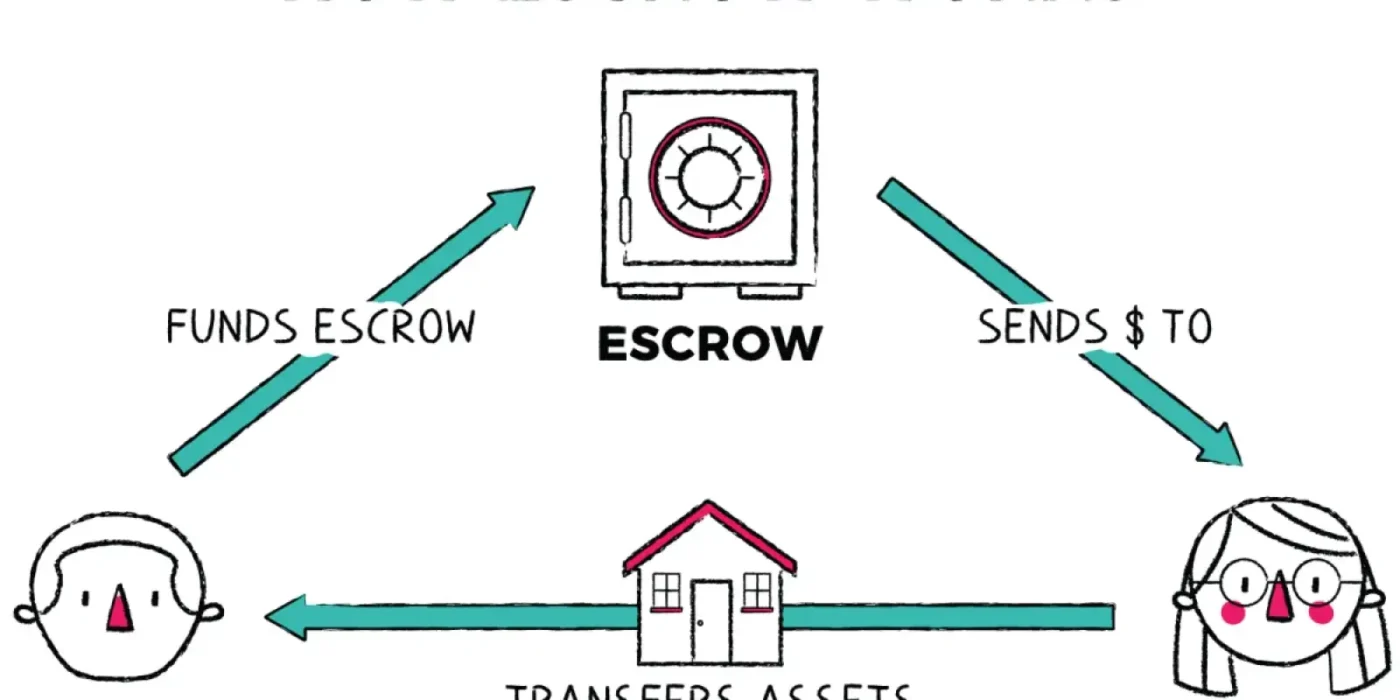
Escrow introduces a neutral payment arrangement between the buyer and seller.
Instead of the buyer paying the seller directly, the money is held according to the agreed conditions of the transaction.
The basic process looks like this:
Buyer → Escrow → Seller
The buyer secures the payment.
The seller delivers the item.
The buyer confirms that the agreed conditions have been met.
The funds are then released to the seller.
This creates a structured process instead of relying entirely on trust.
Escrow vs Bank Transfer: What’s the Difference?
The biggest difference is when the seller gets the money.
With a direct transfer, the seller receives the money immediately after the transfer is completed.
With escrow, the payment can remain held until the agreed release condition has been satisfied.
| Direct Bank Transfer | Escrow |
|---|---|
| Buyer pays seller directly | Buyer secures payment through escrow |
| Seller receives funds immediately | Funds remain held until release conditions are met |
| Relies heavily on trust | Adds a structured transaction process |
| Buyer may have limited options after payment | Dispute/release procedures may be available depending on the service |
| Simple and familiar | Designed for transactions where both parties need additional protection |
Is Direct Bank Transfer Bad?
No.
Bank transfers are an important and useful way to send money.
If you’re paying your landlord, sending money to family, paying a trusted business or purchasing from a company you already know, a normal transfer may be completely appropriate.
The issue isn’t the bank transfer itself.
The issue is sending a large amount of money directly to someone you don’t know and hoping they keep their promise.
That’s where additional transaction protection can be useful.
Why Is Escrow Useful for Online Shopping?
Let’s say you’re buying a ₦750,000 laptop from someone you found online.
With a direct transfer, you might send the ₦750,000 to the seller.
The seller now has your money.
You are waiting for the laptop.
If the seller disappears, sends something completely different or refuses to cooperate, you’ve got a problem.
With an escrow arrangement, the payment is secured under the agreed transaction terms before the seller receives the funds.
The seller can see that the buyer has secured the payment, while the buyer doesn’t have to simply hand the money directly to a stranger.
That’s the basic idea behind escrow.
Escrow Can Protect Sellers Too
People sometimes think escrow is only designed for buyers.
That’s not true.
Sellers also face risks.
Imagine you’re selling a ₦1 million camera to someone you’ve never met.
The buyer says:
“Send it first. I’ll transfer when I receive it.”
Why should you trust them?
The seller could send the camera and then discover that the buyer doesn’t pay.
An escrow transaction can give the seller greater confidence that the buyer has already secured the required funds before delivery.
So escrow isn’t simply:
Buyer protection.
It is about creating trust between both sides.
What Happens If There’s a Dispute?
Sometimes things don’t go according to plan.
Maybe the seller sends the wrong product.
Maybe the package doesn’t arrive.
Maybe the buyer claims the item isn’t what was advertised.
This is where the rules of the escrow service become important.
A proper escrow process should clearly explain:
- When funds can be released
- What happens if delivery fails
- How disputes are opened
- What evidence may be required
- How both parties are contacted
- What happens if the buyer and seller disagree
Before using any escrow service, read and understand its terms.
When Should You Consider Escrow?
Escrow can be particularly useful when:
You’re dealing with someone you don’t know
If you’ve never met the seller or buyer, additional protection can be valuable.
The transaction is expensive
The more money involved, the more important it becomes to think about how the transaction is structured.
The buyer and seller are in different cities
If you’re in Abuja and the seller is in Lagos, for example, you may never meet before the transaction is completed.
A structured payment process can make both parties more comfortable.
You’re buying through social media
Instagram, WhatsApp, Facebook and TikTok are great places to discover products, but you may not know the person behind the account.
You’re selling an expensive item
Sellers can also use escrow to reduce uncertainty around whether the buyer has actually secured the money.
How EnlistPay Fits In
EnlistPay is designed around a simple idea:
Make online transactions easier to trust.
A buyer and seller can create a transaction with details such as the item, price and agreed release conditions.
The buyer then secures the payment.
The seller proceeds with delivery.
The buyer receives and checks the item.
Once the agreed conditions are satisfied, the payment can be released to the seller.
Both sides can follow the transaction instead of relying entirely on messages and promises.
Does Escrow Make a Transaction Completely Risk-Free?
No.
That’s important to understand.
Escrow can reduce certain payment and trust risks, but it doesn’t magically eliminate every possible problem.
You should still:
- Verify the other party.
- Confirm the product details.
- Keep transaction records.
- Check delivery information.
- Read the escrow service’s terms.
- Be careful with unusually cheap offers.
- Never share passwords, PINs or sensitive banking credentials.
Think of escrow as another layer of protection, not a reason to stop being careful.
So, Which Is Safer?
For transactions involving people you already know and trust, a direct bank transfer may be perfectly suitable.
For higher-value transactions between people who don’t know each other, escrow can provide an additional layer of structure and protection.
The choice ultimately depends on the situation.
But if your biggest concern is:
“What happens to my money if the other person doesn’t keep their side of the deal?”
that’s exactly the type of problem escrow is designed to address.
Final Thoughts
The internet has made it incredibly easy to buy and sell from people across Nigeria.
But distance creates a trust problem.
You might be in Abuja buying from someone in Lagos.
You might be in Port Harcourt buying from a seller in Kano.
You might never meet the person face-to-face.
A direct bank transfer simply moves the money.
An escrow transaction can add a process around the payment.
The goal isn’t to make online transactions complicated. It’s to make the expectations clearer for everyone involved.
Before sending a large payment to someone you’ve only met online, consider whether a more structured payment process makes sense for the transaction.
EnlistPay — Secure the deal. Ship with confidence.